How to Assess SiteGround for a Small Business Site
SiteGround’s published web-hosting plans are best assessed as a set of stated capacities and site-management tools, rather than as proof of a particular speed, uptime or business outcome. For a small business, the practical starting point is to define the current website’s scope: how many sites need hosting, how much storage is likely to be needed, whether email and migration assistance matter, and whether more than one person will help manage the site.
The provider presents three shared-hosting tiers—StartUp, GrowBig and GoGeek—with different website allowances, storage levels and workflow features. Its plan pages also list core provisions such as SSL, CDN, daily backups, email, website transfer and support. Those inclusions may reduce the number of separate services a lean team needs to arrange, but their value depends on the way the individual site is built and operated.
It is also worth separating an introductory offer from the longer-term cost of hosting. The published plan presentation identifies a 12-month prepayment basis, excludes VAT and shows renewal pricing. Treat the checkout screen and the applicable terms as the final source for the price and limits that apply to your order.
A sensible comparison therefore combines present needs with the next likely stage of the site. A single brochure website may have a different fit from a portfolio with client collaborators or a modest shop that needs staging and a more deliberate backup routine.
Published Features That May Help Lean Teams
Across its published web-hosting plans, SiteGround lists several features that can be relevant when a small team wants to keep routine website administration in one place. These include a free domain name, free website transfer, daily backups, free SSL, CDN, email accounts and 24/7 support. The provider also lists site-building tools, CMS installation, database access and SSH/SFTP access in its plan information.
For a business moving an existing website, the listed website-transfer and migration-related tools are worth checking against the current platform and the site’s complexity before purchase. Similarly, included email can be useful for a simple business setup, but teams should confirm mailbox, migration and operational requirements during their own evaluation. Published backups are a useful starting point, not a substitute for deciding what data must be retained and how restoration would be handled for a particular site.
The plans also list WordPress-oriented tools such as managed auto-updates, WP-CLI and SSH. These may be relevant to teams that use WordPress and want provider-listed maintenance features available alongside hosting. They do not, on their own, establish how a specific plugin mix, theme, integration or traffic pattern will behave.
Tier differences matter for workflow as well as capacity. SiteGround’s published GrowBig information identifies on-demand backups and staging as exclusive features, alongside a faster-PHP statement in the provider’s plan presentation. For a team that needs a safe place to review changes before a live update, staging may be a more meaningful selection criterion than a broad marketing label. Collaborators are also listed in the plan presentation, so agencies, freelancers and business owners can compare that capability with their actual access needs.
The useful question is not whether every listed feature is needed on day one. It is whether the included tools align with the work the team expects to perform, and whether the plan’s current terms clearly cover the required setup, migration, maintenance and support arrangements.
Plan Capacity and Upgrade Considerations
SiteGround’s published comparison sets out a clear capacity ladder. StartUp is listed for one website with 10 GB of web space and an approximate guidance figure of 10,000 monthly visits. GrowBig is listed for unlimited websites, 50 GB of web space and approximately 100,000 monthly visits. The published web-hosting page lists GoGeek with unlimited websites and 100 GB of storage.
These figures can help narrow the initial choice, but they are planning inputs rather than guarantees about traffic, conversion, reliability or performance. A business should consider the nature of its files, media library, email use and site architecture, not only a visitor estimate. It should also leave room for the likely addition of another site, landing pages, staging copies or agency access.
StartUp may be easier to compare when the requirement is genuinely one small website and the listed 10 GB allowance is sufficient. GrowBig introduces a larger stated storage allowance and unlimited website hosting, and the provider lists staging and on-demand backups in its GrowBig feature set. GoGeek’s published 100 GB storage allowance may be relevant where the business expects a larger footprint, although the right tier still depends on the plan details shown at purchase.
The most useful upgrade question is operational: will the next stage of work need another website, more storage, a staging environment or a more flexible backup process? If the answer is uncertain, compare the present tier, renewal price and upgrade path at checkout rather than choosing solely on the promotional monthly figure.
Plan comparison visual: A section-specific comparison of the published StartUp, GrowBig and GoGeek website and storage allowances can help readers review the capacity differences at a glance.
What to Verify Before Signing Up
AI-generated generic editorial illustration — not a retailer product photo and does not depict the reviewed product or service. Support a cautious pre-purchase verification checklist grounded in the published plan presentation.
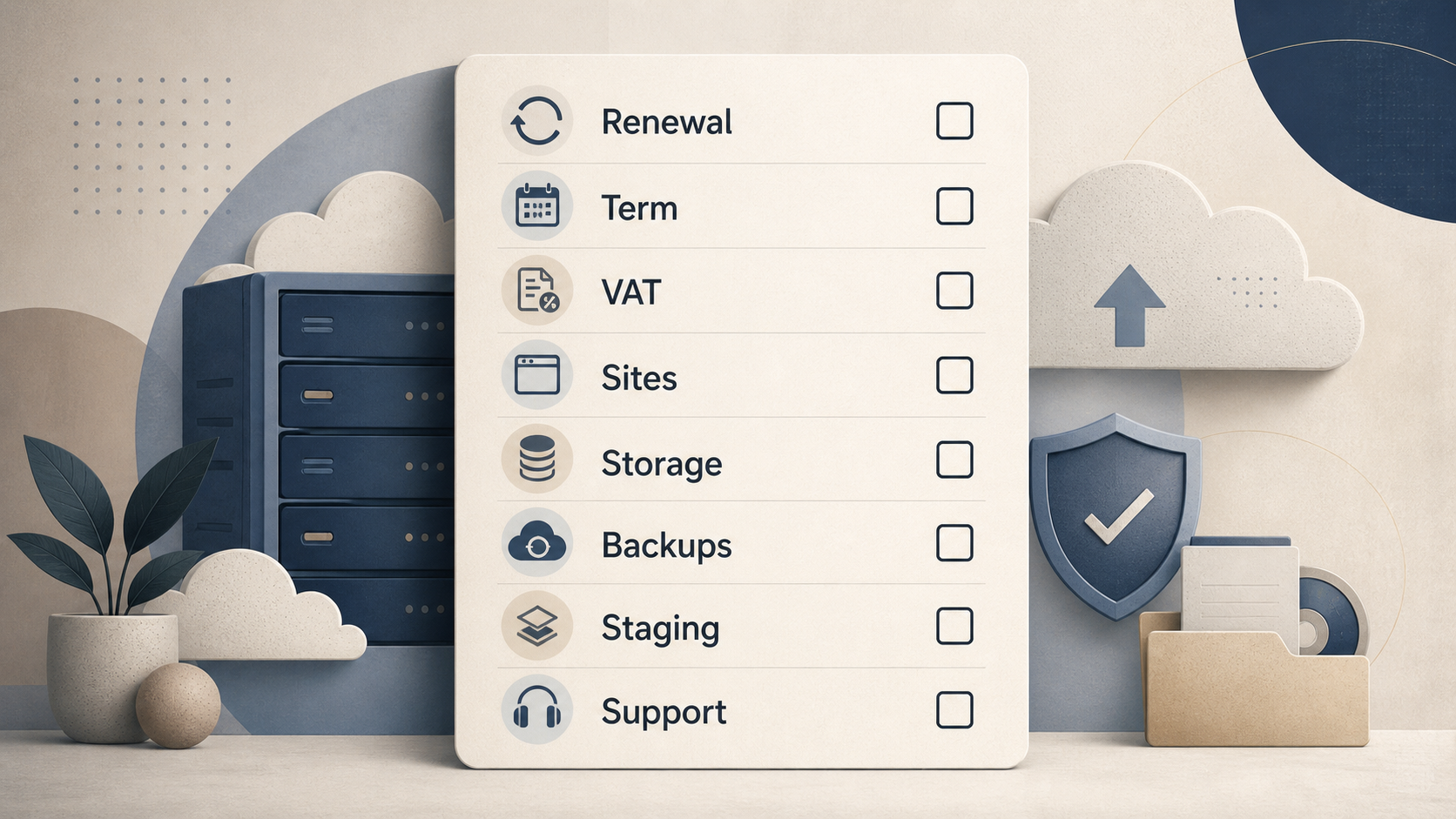 Before selecting a plan, review the commercial terms as carefully as the feature list. The supplied SiteGround plan information states that the displayed offers are prepaid for 12 months and exclude VAT. It also presents distinct renewal prices, so the introductory monthly amount should not be assumed to be the ongoing rate after the initial term.
Check the exact plan selected at checkout for its listed website allowance, storage, renewal price, applicable tax, term length and any current promotional conditions. If a business is comparing several providers, recording these items on the same basis can make the decision clearer than comparing headline discounts alone.
Next, confirm the operational details that matter to the site. These can include the migration route, email requirements, backup approach, need for staging, collaborator access and any WordPress tools the team expects to use. SiteGround lists daily backups across its hosting presentation, while GrowBig’s published feature list highlights on-demand backups and staging; a buyer should still verify that the selected tier matches the intended workflow.
Finally, check practical boundaries before committing. A site with substantial media, several domains or an expected expansion should be compared against the stated site-count and storage limits. A simple checklist creates a better decision record than relying on a general impression of a plan’s feature set.
Pre-sign-up checklist visual: Review term length, renewal pricing, VAT, site count, storage, backup needs, staging, email, migration and support before completing the order.
Who SiteGround May Suit
Based on the published plan structure, SiteGround may be practical for small businesses, freelancers and lean teams that want core hosting provisions—such as SSL, CDN, backups, email, transfer support and site-management tools—presented alongside tiered capacity. Brochure sites, personal portfolios and modest business websites can compare their requirements directly with the listed StartUp allowance of one website and 10 GB of storage.
Teams expecting to manage more than one website, work with collaborators or use staging may want to examine GrowBig and GoGeek more closely. GrowBig’s published comparison includes unlimited websites, 50 GB of storage, staging and on-demand backups. The appropriate choice is not universal: it depends on the organisation’s storage needs, website count, expected workflow and checkout terms.
Businesses with complex migrations, specialised email arrangements, substantial media requirements or a need for capabilities not addressed in the published plan details should compare alternatives and confirm requirements directly before purchase. The same applies to anyone looking for a specific performance commitment or an independently tested result; this review is limited to the provider’s published plan information.
Frequently Asked Questions
Does SiteGround include SSL certificates, backups, and email accounts?
SiteGround’s published web-hosting information lists free SSL, backups and email among the core plan features. The shared-hosting comparison also refers to automated daily backups. Confirm the selected plan’s current details at checkout, especially if your site needs a particular backup or email workflow.
How many websites and how much storage does each SiteGround plan list?
The published comparison lists StartUp with one website and 10 GB of web space. GrowBig is listed with unlimited websites and 50 GB of web space. The web-hosting page lists GoGeek with unlimited websites and 100 GB of storage. These are provider-stated plan capacities and should be checked against the current checkout presentation.
Are SiteGround’s displayed introductory prices the same as renewal prices?
No. The supplied plan information presents introductory prices separately from renewal prices and states that the promotional presentation is prepaid for 12 months and excludes VAT. Review the renewal amount, term and taxes for the exact plan before placing an order.
Which SiteGround plan includes staging and on-demand backups?
SiteGround’s published GrowBig plan information identifies staging and on-demand backups as exclusive features. Verify the current feature list for the tier you select, since plan terms and presentation can change.
Sources
Related reading
- Best web hosting for small business websites: evidence-led choices
- Hostinger web hosting review for small businesses: strengths, limits, and fit
- How to choose web hosting for a small-business website
- Shared hosting vs managed WordPress hosting for a small-business website
Editorial information: About our editorial team · Read our editorial policy · Read our affiliate disclosure.